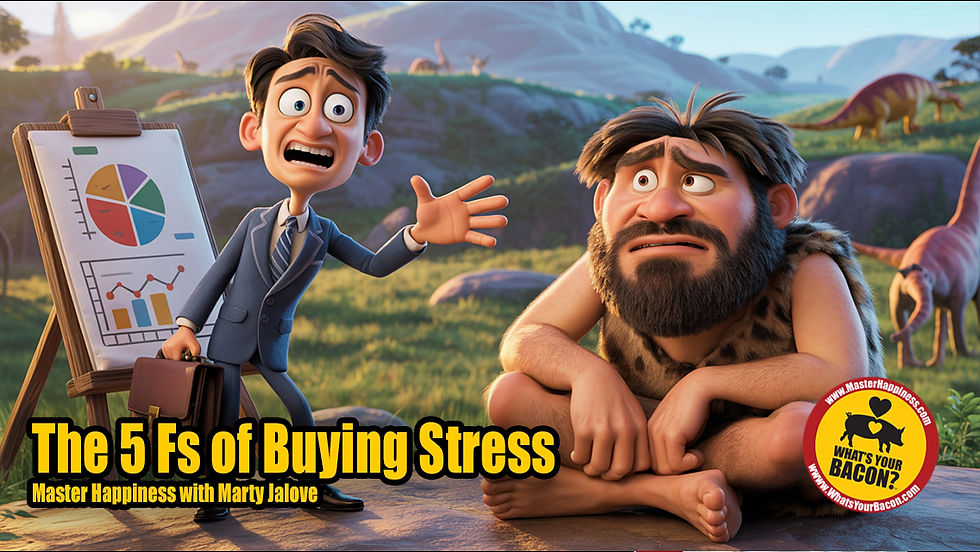
Decoding SALES Panic: The 5 Fs of Selling Stress

Have you ever walked into a high-stakes sales meeting feeling prepared, only to have your mind go blank the moment the prospect challenged your pricing? Or perhaps you found yourself aggressively defending a feature that didn't even matter, unable to stop yourself?
These aren't signs that you are bad at your job. They are biological responses hardwired into your nervous system.

In sales, we often talk about pipelines, conversion rates, and closing techniques. We rarely talk about what happens physiologically when the pressure mounts. Understanding your body's stress responses, specifically the "5 Fs" can be the difference between losing a deal and navigating a tough conversation with grace.
This guide will break down the Fight, Flight, Freeze, Fawn, and Flop responses, show you how they show up in sales appointments, and give you practical tools to regain control.
The Biology of Sales Stress
Your brain is designed to keep you safe. When you perceive a threat, whether it’s a saber-toothed tiger or a prospect saying, "Your competitor is half the price" your amygdala sounds the alarm. This triggers the sympathetic nervous system, flooding your body with cortisol and adrenaline.
In a sales context, this "threat" is usually social or professional rejection. However, your body reacts as if your physical survival is at stake. This reaction manifests as one of the 5 Fs. Let's explore how each one sabotages your sales performance and how to fix it.

1. Fight: The Aggressive Defender
The Fight response is all about self-preservation through dominance. In nature, an animal fights when it believes it can overpower the threat.
How it looks in sales:You stop listening and start reloading. When a prospect raises an objection, you interrupt them. Your tone becomes sharp, defensive, or argumentative. You might find yourself saying things like, "That’s actually not true," or trying to prove the prospect wrong rather than understanding their concern.
Why it hurts performance:Sales is about building rapport and trust. The Fight response destroys both instantly. You become an adversary rather than a consultant. Even if you "win" the argument, you usually lose the sale because no one likes being bullied into buying.
How to overcome it:
Pause and breathe: If you feel your chest tighten or your voice raise, take a three-second pause.
Validate first: Force yourself to start your next sentence with, "That makes sense," or "That is a fair concern." This signals to your brain that you are in a safe conversation, not a battle.

2. Flight: The Escapist
The Flight response is the urge to run away from danger. If you can't fight it, you flee from it.
How it looks in sales:You rush through the presentation to get it over with. When a difficult question comes up, you deflect or change the subject entirely. You might end the meeting prematurely, accepting a vague "we'll think about it" just to escape the awkward tension of asking for the close.
Why it hurts performance:You leave money on the table. By avoiding the hard parts of the conversation, like budget discussions or decision-making timelines, you fail to uncover the real objections. The prospect senses your unease and loses confidence in your solution.
How to overcome it:
Anchor yourself: Plant your feet firmly on the floor. Physical grounding can reduce the psychological urge to run.
Lean into the awkwardness: Adopt the mantra, "The obstacle is the way." When you want to change the subject, that is exactly where you need to dig deeper. Ask, "Can you tell me more about that concern?"

3. Freeze: The Deer in Headlights
When fighting or fleeing seems impossible, the body freezes to avoid detection. It is a state of temporary paralysis.
How it looks in sales:Your mind goes blank. You forget your script, your product knowledge, and sometimes even the prospect's name. You might stumble over words or leave long, uncomfortable silences that aren't strategic; they're just empty. You feel stuck, unable to move the conversation forward.
Why it hurts performance:Competence builds confidence. When you freeze, you appear unprepared or unknowledgeable. This breaks the momentum of the meeting and makes the prospect question your expertise.
How to overcome it:
Move your body: The freeze response is physical immobility. Counter it by taking a sip of water, shifting your posture, or using hand gestures. Small movements can "unlock" your brain.
Buy time with a question: Have a default safety phrase ready, such as, "That’s an interesting point. Let me take a second to think about the best way to address that."

4. Fawn: The People Pleaser
The Fawn response is a newer addition to trauma psychology. It involves appeasing the threat to avoid conflict. If you make the threat happy, it won't hurt you.
How it looks in sales:You agree with everything the prospect says, even when they are wrong. You offer discounts immediately without being asked. You over-apologize for minor issues. You act more like a desperate friend than a business equal, terrified of upsetting the prospect.
Why it hurts performance:You weaken your value. When you fawn, you strip away your authority. Prospects want to buy from experts who can guide them, not pushovers who will say anything to be liked. This often leads to bad deals with demanding clients who don't respect your boundaries.
How to overcome it:
Practice the "No": In low-stakes situations, practice disagreeing politely.
Stick to the script: If you are prone to offering unauthorized discounts, write down your pricing bottom line before the call and commit to not going below it without a manager's approval.

5. Flop: The Shutdown
The Flop (sometimes called Faint) is the most extreme response. It is a total system shutdown where the body goes limp or the mind dissociates entirely to numb the pain of the threat.
How it looks in sales: You check out mentally. You are physically in the room (or on the Zoom call), but you are going through the motions with zero energy or enthusiasm. Your voice becomes monotone. You stop caring about the outcome completely, resigning yourself to failure before the call is even over.
Why it hurts performance: Sales requires energy transfer. If you are disengaged, the prospect will be too. This response often happens during burnout or after a streak of rejections. It makes you memorable for all the wrong reasons, as the boring, low-energy salesperson.
How to overcome it:
Sensory engagement: Squeeze a stress ball or focus intensely on the texture of the table. Reconnecting with your physical senses can pull you out of dissociation.
Check your burnout: If you find yourself "flopping" regularly, it may be a sign of deeper burnout requiring a break or a reset of your goals.
Building Your Stress Resilience
Recognizing which of the 5 Fs is your "default" setting is the first step toward mastering your sales psychology. We all have a tendency toward one or two of them.
Here is a quick plan to build resilience:
Identify your trigger: Review your last three bad calls. Did you get angry (Fight)? Did you rush off the phone (Flight)? Did you cave on price (Fawn)?
Label it in the moment: When the feeling hits, say to yourself, "I am in a Freeze response right now." Labeling the emotion reduces the amygdala's activity.
Prepare your antidote: Choose one strategy from the lists above and practice it.
Sales is a high-pressure profession, but your biology doesn't have to dictate your paycheck. By understanding these responses, you can turn a moment of panic into a moment of power.
Next Steps
Want to take control of your sales calls? Start by keeping a "Reaction Journal" for one week. Note down every time you felt stressed during a call and identify which "F" you experienced. Awareness is the precursor to change.
Decoding SALES Panic: The 5 Fs of Selling Stress

Want to learn more about Decoding SALES Panic: The 5 Fs of Selling Stress? Connect with Marty Jalove, the founder of Master Happiness, he's dedicated to helping small businesses, teams, and individuals find Focus, feel Fulfilled, and have Fun. With decades of experience turning ambitious goals into tangible successes, Marty provides the tools and perspective needed to build a purposeful and profitable professional life that you truly enjoy.
Is your team ready to trade burnout for balance and frantic activity for focused results? Let's connect. Reach out to Marty Jalove today, and let’s build a strategy to bring Focus, Fulfillment, and Fun to the heart of your business.


Comments